
GSA-Compliant BIM Services for Federal Projects
The U.S. General Services Administration (GSA) is the federal agency responsible for providing space and standards for federal agencies’ architecture, engineering, and construction needs.
To improve project efficiency and data quality, GSA has mandated Building Information Modeling (BIM) on its capital projects.
In 2003, GSA’s Public Buildings Service established the National 3D-4D-BIM implementation Program to promote BIM across federal design and construction. Today, compliance with federal BIM standards (such as the consensus-based National BIM Standard – United States) is a key requirement on GSA projects.
VARMINE BIM outsourcing services help architects, engineers, and contractors in USA meet GSA BIM compliance by following GSA’s BIM guidelines and deliverable requirements and reaching Digital Construction excellence.

GSA BIM Compliance Standards
National BIM Standard – United States (NBIMS-US)
GSA projects reference NBIMS-US as a foundational framework.
NBIMS-US offers standards developed through consensus that outline BIM applications, requirements, and information exchange processes for the built environment. In practice, GSA and its consultants use NBIMS-US and industry LOD (Level of Development) specifications to guide model content and data. For example, GSA’s BIM documentation notes that NBIMS-US Version 3 “outlines ‘Minimum Modeling Requirements’” for different LODs.
By aligning with NBIMS-US, project teams ensure their BIM content (data, attributes, and geometry) meets GSA’s expectations for quality and completeness.
GSA BIM – Building Information Modeling Guide Series:
GSA has published a BIM Guide Series with detailed technical guidance.
Important references include Guide 02 on Spatial Program Validation, Guide 03 on 3D Laser Scanning, point cloud to BIM conversion, Guide 04 on 4D Phasing, and Guide 05 on Energy Performance.
These guides cover tasks such as verifying that the BIM accurately reflects the project’s space program, capturing existing conditions via 3D scanning, linking the 3D model to construction schedules, and performing energy simulations.
VARMINE BIM follow these guides in practice by validating BIM against the program requirements, integrating point-cloud scans, creating 4D sequencing animations, and incorporating energy analysis outputs, as applicable to each federal project.
COBie and IFC Compliance
GSA mandates use of open-standard data formats for BIM deliverables.
All BIM submissions must be provided in both the native authoring format and the open IFC format. GSA does not require a specific authoring tool, but it does require IFC exports so that models can be exchanged and reviewed consistently.
In addition, GSA requires Construction-Operations Building Information Exchange (COBie) output to support facility management. At project closeout (as-built LOD 500), models must be COBie-compliant and include all tested or commissioned building data in COBie format.
For example, GSA guidance specifies that any data verified by commissioning authorities be included in the BIM deliverable as “open standard (i.e. COBie-compliant)” data.
VARMINE BIM team produces IFC models and COBie spreadsheets that align with these requirements, ensuring that owner/operations data is embedded or linked to the BIM.
Deliverables and Formats:
In practice, a GSA project’s BIM deliverables typically include Revit (or other native format) models, IFC exports, Shop drawings, BOQ – quantity takeoff and derived 2D documents (such as PDFs of floor plans, sections, and elevations) produced from the model.
We ensure BIM authoring outputs are accompanied by high-quality plan sets as needed, all coordinated with the model. We can also provide PDF documentation and facility management outputs as specified to meet GSA submittal standards.
Each project deliverable includes comprehensive construction drawings produced directly from the BIM model, ensuring consistency and clarity for all project phases
Because GSA may request specific file formats or templates for quality control, we are prepared to deliver data using GSA’s templates or clarify requirements with the project team.
Model Progression and LOD
GSA projects use a Model Progression Matrix (MPM) to define the required LOD (Level of Development) for each delivery and discipline.
This ensures the model steadily increases in detail from conceptual design through as built.
GSA references NBIMS and other standards when defining these LODs.
For example, GSA’s documentation notes that NBIMS-US and the AGC BIM Forum LOD Specification provide templates for minimum model properties at each LOD level.
As the project advances, the BIM Execution Plan will typically call for LOD 100–200 in conceptual design, LOD 300 in construction documents, and LOD 400+ in fabrication models.
Upon project completion, the GSA specifically mandates the delivery of LOD 500 (“as-built”) model. These final models must be “fully compliant with all published GSA model view definitions” and COBie-ready.
We build our models according to this progression – capturing basic space volumes early on, adding precise geometry for fabrication, and finally inserting field-verified equipment and materials. This disciplined LOD management is critical for GSA compliance and for integrating with operations and maintenance data.
Interoperability and Data Integration
GSA highlights the significance of open data sharing and seamless integration with other systems. By requiring IFC and COBie, GSA ensures BIM can integrate with facility management (CMMS) and other asset databases facilitating digital twin BIM.
For example, GSA guidance instructs that operations & maintenance information be provided in digital form as object attributes or linked documents (e.g. manuals, O&M files) in the BIM.
In practice, we coordinate closely with client asset managers to embed equipment data, warranty info, and manuals into the model per GSA guidelines. We also use model federation techniques to integrate architectural, structural, and MEPF discipline models into a unified dataset, enabling interoperable workflows.
This data-driven approach means BIM serves as a single source of truth: all plan sets, cost estimates, energy models, and management reports are derived from the coordinated model. By following GSA’s open-standards policy, we ensure our Revit modeling services deliver fully interoperable data – an essential expectation on federal projects.
Other GSA Construction Standards
While BIM compliance is critical, GSA also enforces other design and sustainability standards for its projects:
Facilities Standards (P100)
The GSA’s P100 manual establishes the design standards and performance criteria that must be met for federal buildings. Notably, it mandates the use of advanced energy-saving measures and prohibits the use of on-site fossil fuels in new construction projects.
These updates support federal mandates for net-zero emissions by 2045.
VARMINE BIM design team stays current on P100 by incorporating high-performance building envelope design, electrification of HVAC systems, and life-cycle cost analysis into our BIM workflows.
National 3D-4D-BIM Program
GSA’s internal BIM program establishes official guidelines and provides ongoing support for BIM implementation.
In practice, any large GSA project’s solicitation will include BIM execution requirements (citing GSA guides and contracts).
By working with experienced federal BIM consultants – VARMINE, teams tap into that support structure and ensure compliance with GSA’s model requirements.
Sustainability and Energy Performance
Federal buildings must meet aggressive sustainability standards.
In addition to P100’s energy mandates, GSA follows the Federal Green Building Council’s guidance.
For example, Guiding Principles for Sustainable Federal Buildings and pursues certifications like LEED.
Our 3D BIM Modeling and CAD Services
VARMINE BIM consulting service provides a full suite of BIM and CAD services tailored to GSA construction requirements. We use advanced BIM workflows and coordination to ensure compliance with federal BIM standards.
01
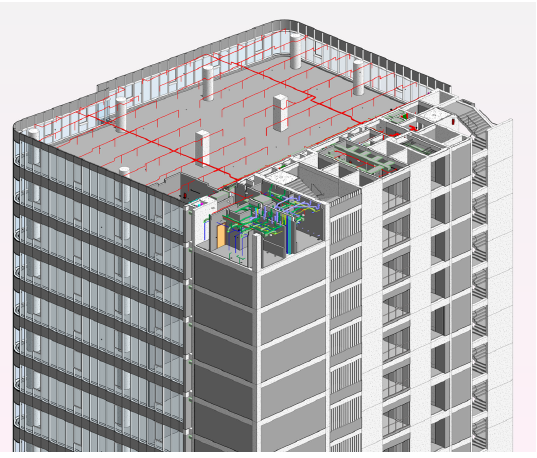
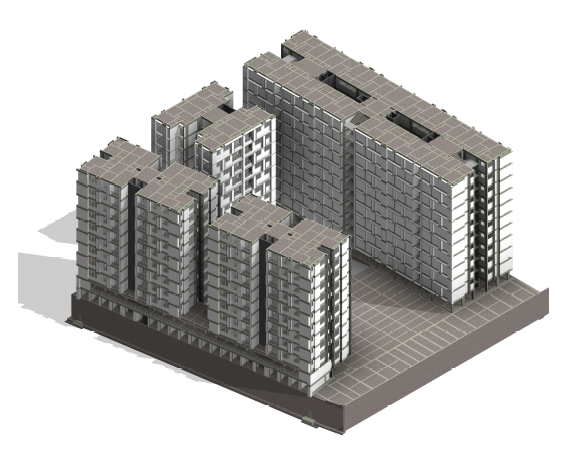
Revit Modeling & BIM Coordination Services (Architectural BIM, Structural BIM , MEP BIM , Scan to BIM)
VARMIE team creates BIM models for AEC Firms.
Each model is developed with correct object properties and GSA-specified space zoning.
We then combine the models from each discipline into a unified, coordinated model, addressing any conflicts and filling in missing data. This multi-disciplinary coordination is guided by GSA’s model ontology (e.g. federated vs. single-discipline models) and ensures all project participants work from the same accurate data.
02
Clash Detection Services and Resolution
Identifying and resolving clashes is a key aspect of BIM quality assurance for the GSA.
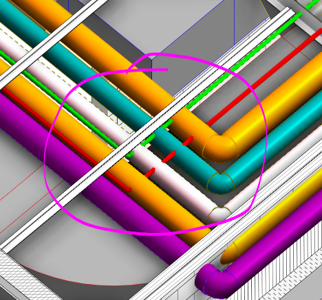
We run automated Revit clash detection (using tools like Autodesk Navisworks or BIM 360) and produce detailed Clash Detection Reports (CDRs) at each design phase. Clash Detection amongst Architectural BIM Model, Structural BIM Model and Revit MEP Model is performed.
GSA requires a CDR at every design milestone as part of the Quality Control Report project. Our reports document both hard clashes (physical intersections) and soft clashes (such as insufficient clearance) between elements. We work with design teams to resolve these conflicts early, minimizing field changes and schedule risk.
03
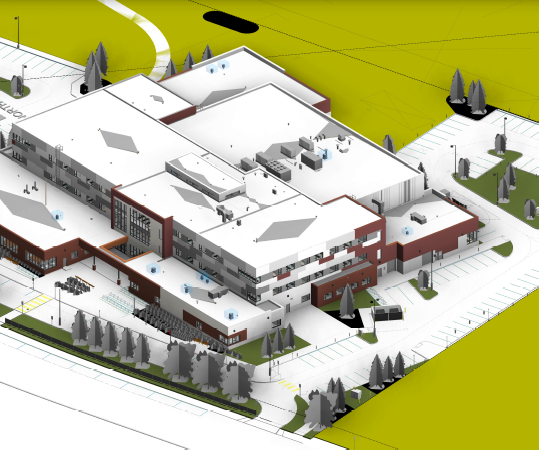
Our team can work on 4D BIM using tools like Synchro or Navisworks enabling virtual design and construction
As GSA notes, 4D modeling “combines a 3D model with time (via a schedule)” so that the construction sequence can be visualized.
These animations help GSA and contractors review phasing, detect sequencing issues, and communicate schedules. We also provide 4D-phasing diagrams and time-lapse visualizations that comply with GSA Guide 04 recommendations.
04
CAD Drafting and Conversion:
We provide CAD drafting support, including conversion of legacy 2D drawings into BIM-ready formats. When required, we provide precise CAD drawings, including plans, sections, and detailed views.
For GSA projects, any 2D deliverables we produce are drawn from the up-to-date BIM, ensuring consistency. We can create GSA-formatted CAD sheets and digital drawings to supplement the BIM deliverables, as required. Revit family creation can also be provided by us. Our team integrates precise engineering design into BIM workflows to ensure accuracy and compliance with GSA standards.
05
COBie and IFC-Compliant Deliverables:
At project completion, we deliver all BIM data in full compliance with GSA requirements. This includes COBie spreadsheets for equipment, spaces, and systems, as well as IFC models for geometric exchange.
We ensure that the final LOD 500 models are COBie-ready with all facility asset data entered. By providing open-data output, we meet GSA’s call for COBie/IFC BIM services. These deliverables seamlessly integrate with GSA’s facility management systems.
Our team is committed to helping architects, engineers, and contractors achieve GSA BIM compliance and fulfill federal BIM standards.
With deep expertise in GSA’s requirements (NBIMS-US, the GSA BIM Guide series, COBie/IFC formats, P100, etc.), we ensure every model and drawing aligns with GSA construction requirements.
Whether you need coordinated Revit models, clash reports, 4D simulations, or full lifecycle BIM deliverables, we provide the technical and procedural support you need.
Partner with VARMINE’s expert BIM team to ensure your next federal project exceeds GSA BIM compliance requirements—from accurate modeling and data integration to fully COBie/IFC-compliant deliverables.